
Furnishing Ideas
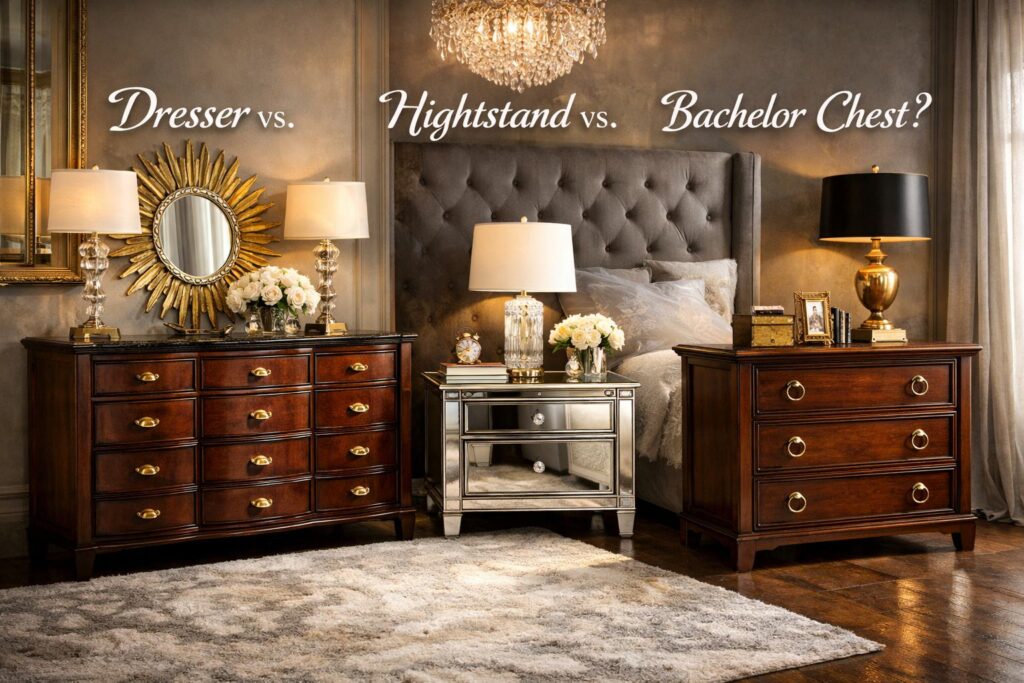
Dresser vs. Nightstand vs. Bachelor Chest: What’s the Difference?
Apr
When you’re furnishing a bedroom, storage pieces are essential—but the terminology can get confusing. Dresser, nightstand, bachelor chest: they all hold stuff, so what’s the actual difference? And more importantly, which one do you need?
Let’s break down each piece, what it’s best for, and how to choose the right one for your space.
The Dresser: Your Bedroom Workhorse
What it is: A wide, low storage piece with multiple drawers (usually 6 or more), designed to hold clothing.
Key characteristics:
Width: 50–70 inches wide
Height: 30–36 inches tall
Depth: 16–20 inches deep
Drawer count: 6–9 drawers, often in a double-stacked configuration
Best for:
Storing folded clothes—think t-shirts, sweaters, jeans, and linens. The width gives you serious storage capacity without taking up too much vertical space.
Where it goes:
Against a wall, usually opposite the bed or on a side wall. You’ll need roughly 6–7 feet of wall space to accommodate the piece plus walking room.
Pro tip: If you’re tight on closet space, a dresser is non-negotiable. It’s the most efficient way to store bulk clothing items you don’t hang.
The Nightstand: Bedside Essential
What it is: A small, compact table with 1–3 drawers (or open shelving), designed to sit beside your bed.
Key characteristics:
Width: 16–24 inches wide
Height: 24–28 inches tall (roughly level with your mattress)
Depth: 14–18 inches deep
Storage: 1–3 drawers, or open shelf + drawer combo
Best for:
Keeping essentials within arm’s reach—phone, glasses, book, water, alarm clock, medication. The storage is for small items you use daily, not bulk clothing storage.
Where it goes:
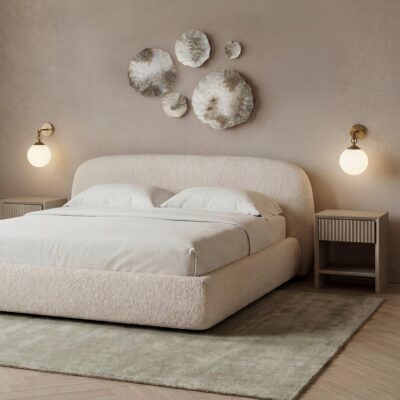
Flanking your bed. Most people use two for symmetry, though single sleepers might use just one.
Pro tip: Match your nightstand height to your mattress height. Too tall or too short and reaching for your alarm becomes an annoyance.
The Bachelor Chest: The Compact Hybrid
What it is: A tall, narrow chest of drawers—essentially a dresser’s height in a nightstand’s footprint.
Key characteristics:
Width: 24–36 inches wide
Height: 48–54 inches tall
Depth: 16–20 inches deep
Drawer count: 3–5 drawers, stacked vertically
Best for:
Small bedrooms, guest rooms, or anyone who needs clothing storage but doesn’t have wall space for a full dresser. It holds more than a nightstand but takes up less floor space than a dresser.
Where it goes:
Against a wall, in a corner, or even beside the bed if you don’t mind the height. Some people use one instead of a nightstand; others pair it with a dresser for extra storage.
Why “bachelor”? The name comes from the idea that a single person in a small apartment needs storage without the footprint of a full bedroom set. It’s efficient, no-frills, and gets the job done.
Quick Comparison Table
Dresser
Primary Use: Clothing storage
Width: 50–70″
Height: 30–36″
Drawer Count: 6–9
Best For: Master bedrooms, bulk storage
Floor Space: High
Nightstand
Primary Use: Bedside essentials
Width: 16–24″
Height: 24–28″
Drawer Count: 1–3
Best For: Daily essentials, symmetry
Floor Space: Low
Bachelor Chest
Primary Use: Compact clothing storage
Width: 24–36″
Height: 48–54″
Drawer Count: 3–5
Best For: Small spaces, guest rooms
Floor Space: Medium
Which One Should You Choose?
Pick a dresser if:
- You have a full wardrobe of folded clothes.
- You’ve got the wall space (6+ feet).
- You want the most storage per square foot.
Pick nightstands if:
- You need a surface and storage beside your bed.
- You value symmetry and bedside convenience.
- You don’t need them for heavy clothing storage.
Pick a bachelor chest if:
- Your bedroom is tight on space.
- You need clothing storage but can’t fit a dresser.
- You want vertical storage that doesn’t dominate the room.
Pro move: Many bedrooms use all three. A dresser for bulk storage, nightstands for bedside convenience, and a bachelor chest in a corner or closet for overflow. But if you’re starting from scratch and can only pick one, the dresser gives you the most versatility.
Final Thoughts
The difference comes down to function and footprint. Dressers are wide and low for maximum clothing capacity. Nightstands are small and bedside for daily essentials. Bachelor chests are tall and narrow for space-challenged rooms.
Measure your space, inventory your storage needs, and choose accordingly. And remember: the best piece is the one you’ll actually use.